Guide
What is a hydrosol, and how do you use one?
Hydrosols sit quietly beside essential oils and are far easier to live with. This is what they are, how they are made, and the handful of ways we actually use them here on São Miguel.

The short answer
A hydrosol is the water left behind by steam distillation. Steam passes through fresh plant material, carries the aromatic compounds with it, and is then cooled. What condenses separates into two parts: a thin layer of essential oil on top, and below it the aromatic water. That water is the hydrosol. It is not water with oil stirred into it, and it is not a dilution. It is a product of the same distillation, with its own scent and a much softer character.
Hydrosol or essential oil?
Both come out of the same still on the same day. The difference is concentration. An essential oil is highly concentrated and generally needs diluting before it touches skin. A hydrosol is ready as it is, which makes it the easier choice for the face, for children's rooms, for pillows and for everyday use.
Essential oil
Concentrated, oil-soluble, used by the drop and diluted in a carrier. A little goes a long way.
Hydrosol
Gentle, water-based, used by the spray. No dilution needed, and the scent is closer to the living plant.
How ours are made
We cut by hand in the morning and load the still while the plant is still fresh. One plant per batch, nothing blended in afterwards, no preservative and no added fragrance. The water that comes off is rested, filtered and filled into glass. That is the whole process, and it is the reason a hydrosol from one harvest can smell slightly different from the next.
More about the island and the growing conditions is on the Azores page.
Six ways to use one
Facial mist
Spray onto clean skin before a serum or oil, or through the day when skin feels dry.
Hair and scalp rinse
Mist through damp hair after washing. Rosemary is the traditional choice here.
Linen and pillow spray
A light pass over sheets before bed. Lavender is the obvious one.
Room spray
Two or three sprays into the air instead of a synthetic diffuser blend.
Clay masks
Use the hydrosol in place of water when mixing clay, so the mask carries the plant too.
After sun or after shaving
Kept in the fridge and sprayed cool on warm skin.
Which plant to start with
If you have never used one, lavender is the friendliest place to begin. Rosemary suits hair and scalp. Thyme and sage are more herbal and less floral. Eucalyptus and pine are clearer and greener, closer to the forest than the garden.
Storing and shelf life
Keep the bottle closed, cool and out of sunlight. Unpreserved hydrosols generally last six to twelve months, longer in a fridge. If the scent turns sour or the liquid looks cloudy, it has had its life.
Common questions
- What is a hydrosol?
- A hydrosol is the water that condenses during the steam distillation of a plant. It carries a small amount of the plant's water-soluble aromatic compounds, which is why it smells of the plant but is far gentler than an essential oil.
- Is a hydrosol the same as a floral water?
- The terms are used interchangeably. Some products sold as floral water are simply water with fragrance or essential oil added, so it is worth checking that the label names one plant and nothing else.
- Do hydrosols need to be refrigerated?
- Unpreserved hydrosols keep best cool and out of direct light. A fridge extends their life and makes a facial mist more pleasant in summer.
- How long does a hydrosol last?
- Roughly six to twelve months when stored cool and closed. Trust your nose: a hydrosol that smells sour or cloudy has turned.
- Can you drink hydrosols?
- Some are used in cooking in small amounts, but that depends on the plant and the producer. Ours are made for external use unless stated otherwise on the label.
Our hydrosols
Single plant, distilled on the island
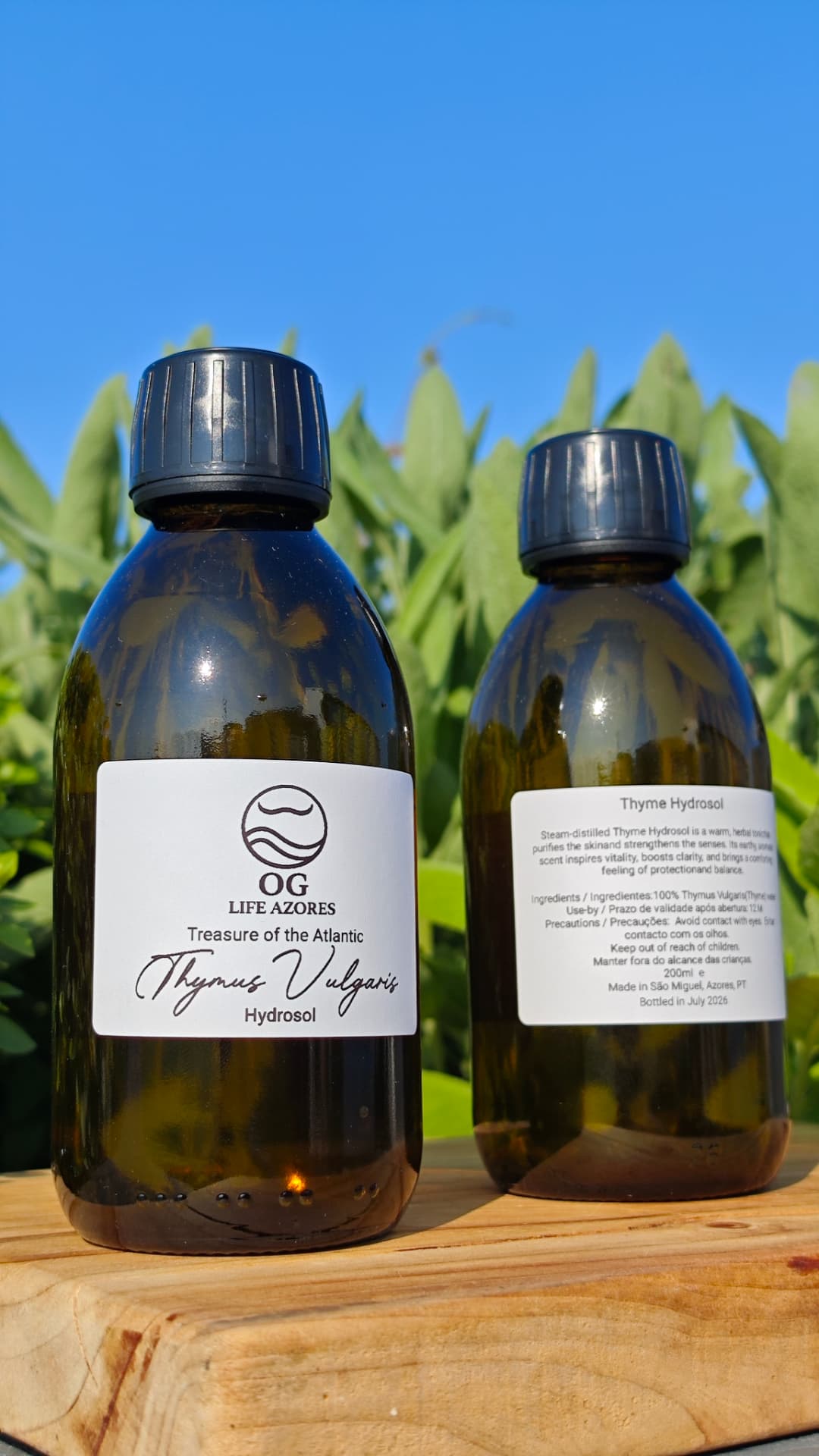
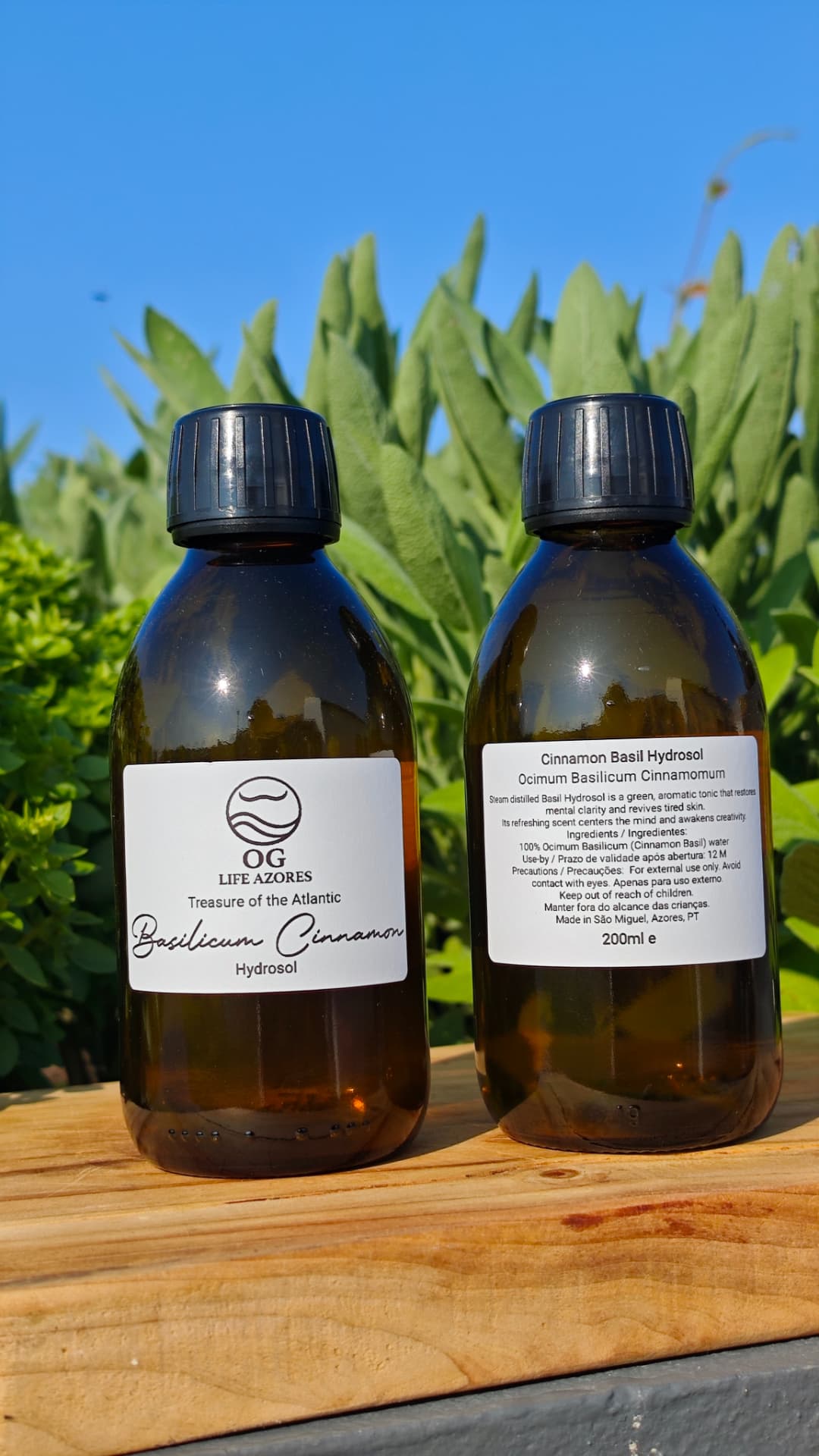
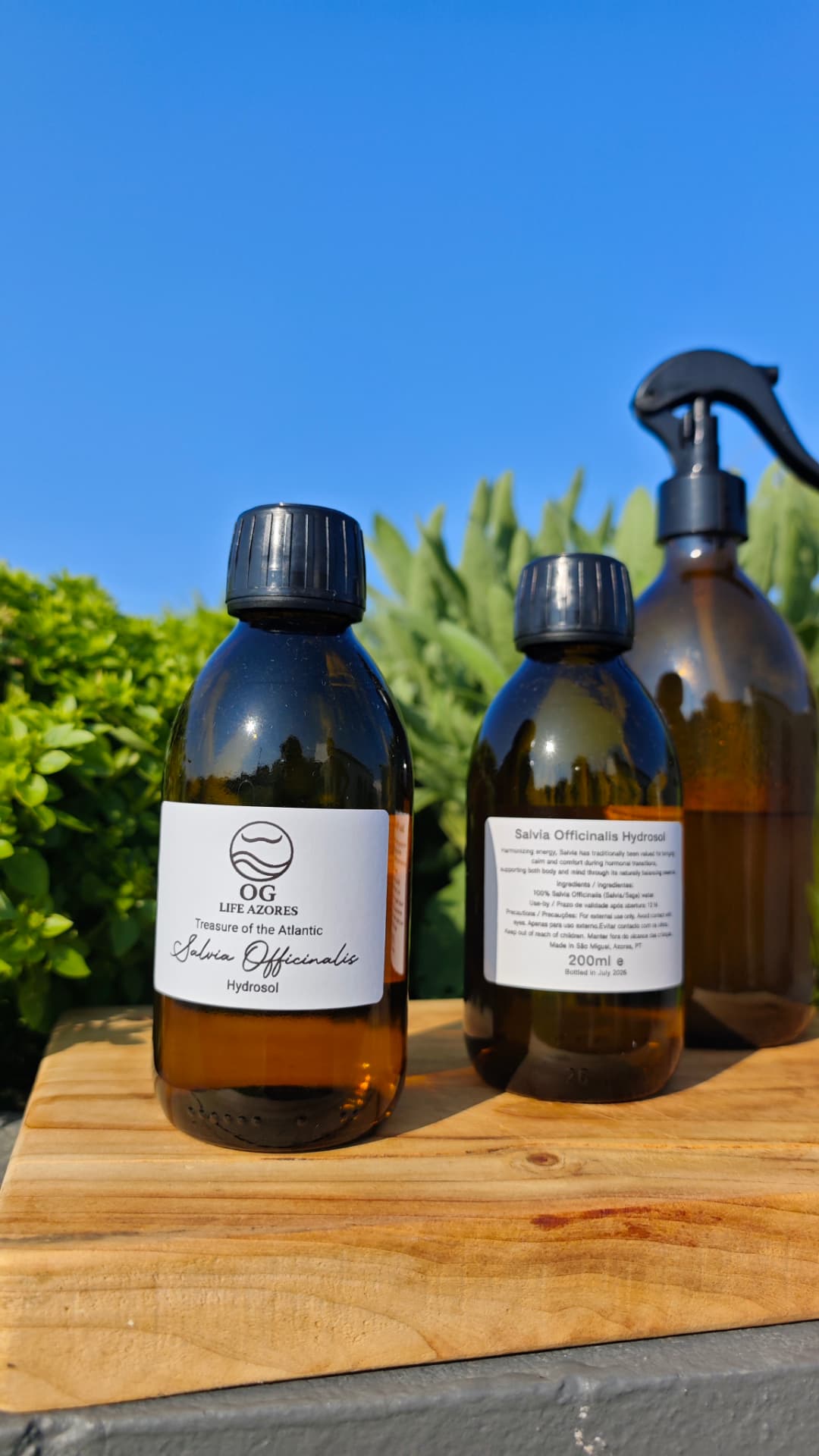
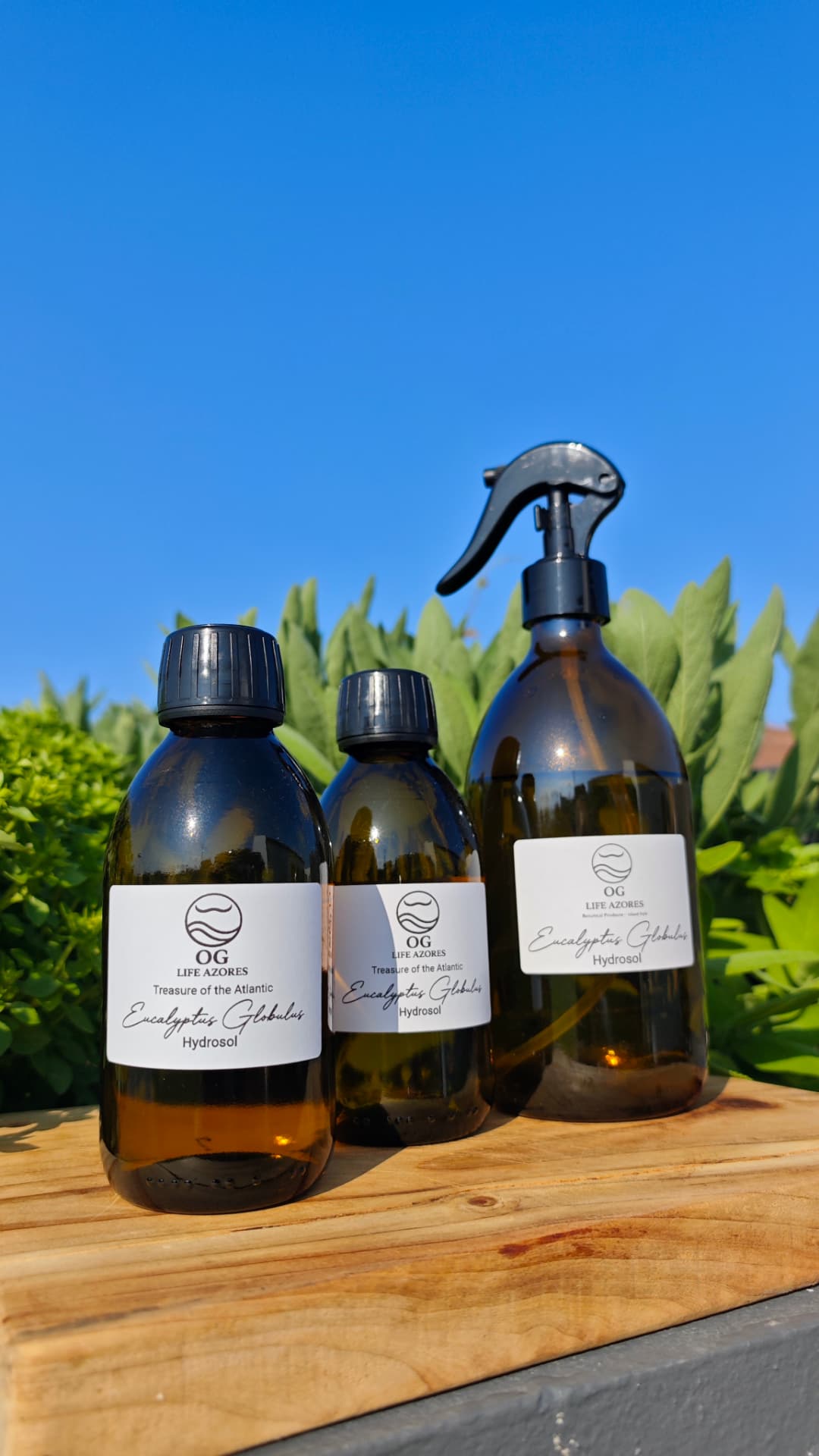
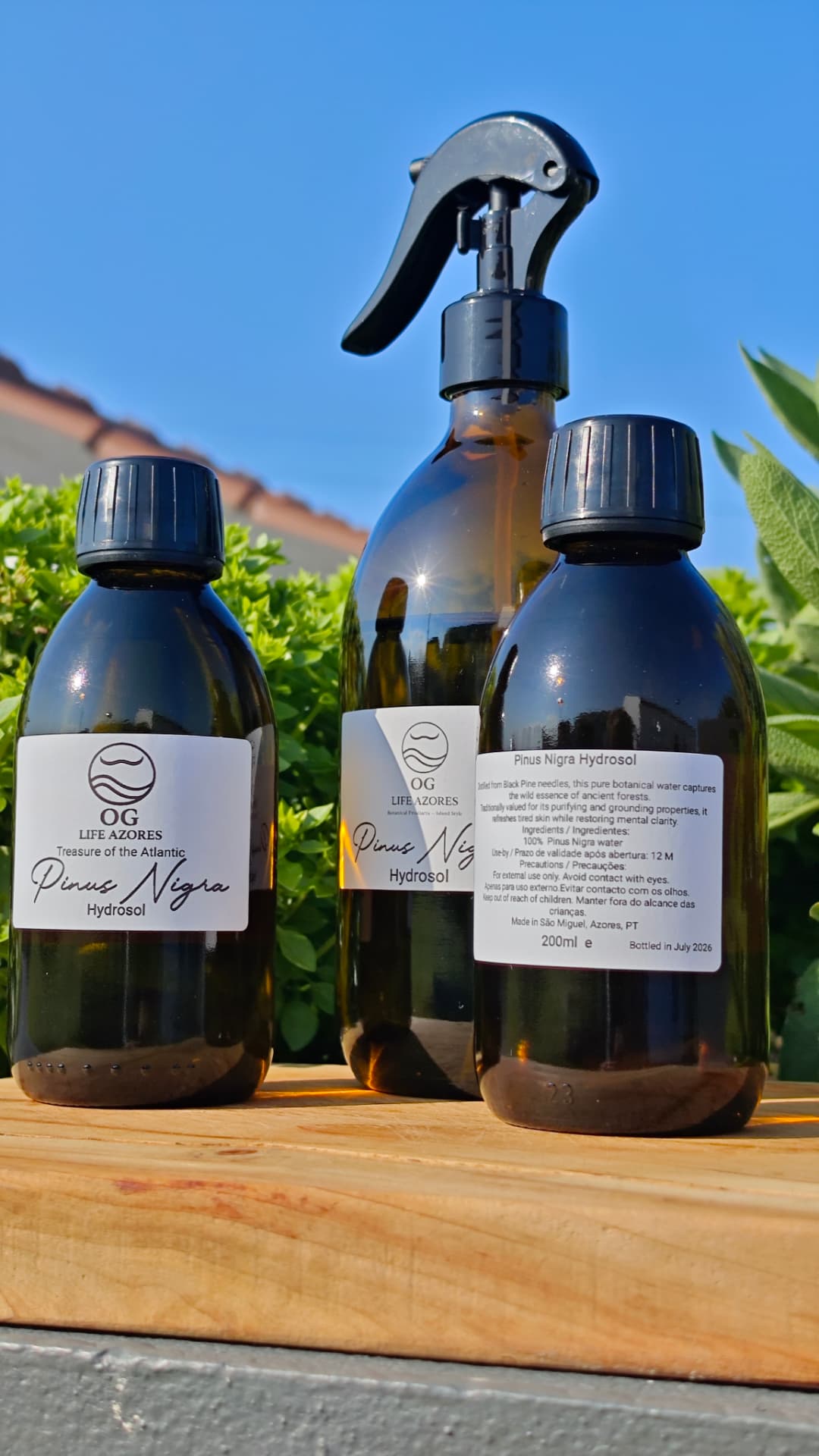
Each one is made from a single harvest on São Miguel, in 200 ml and 500 ml glass.
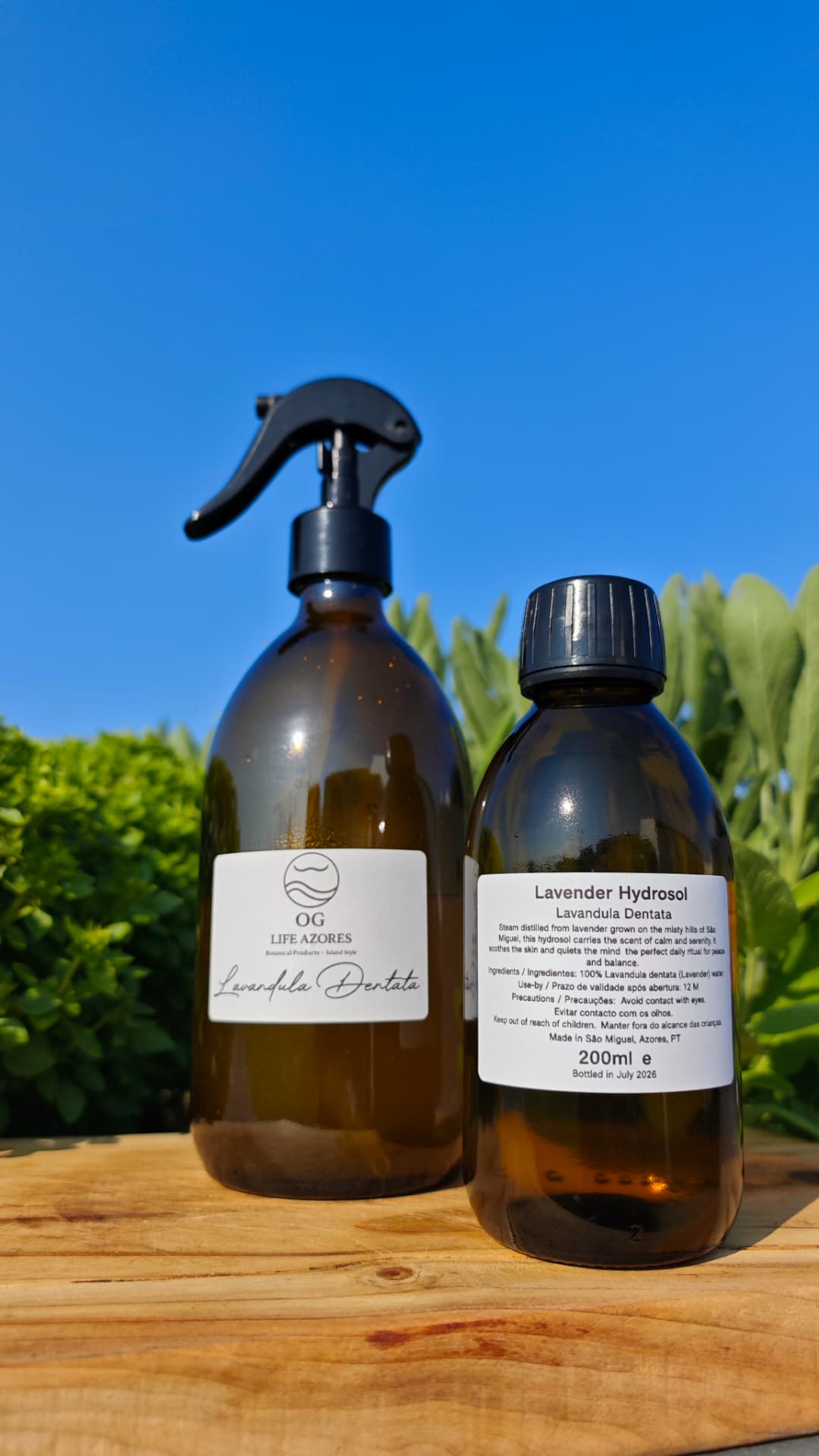
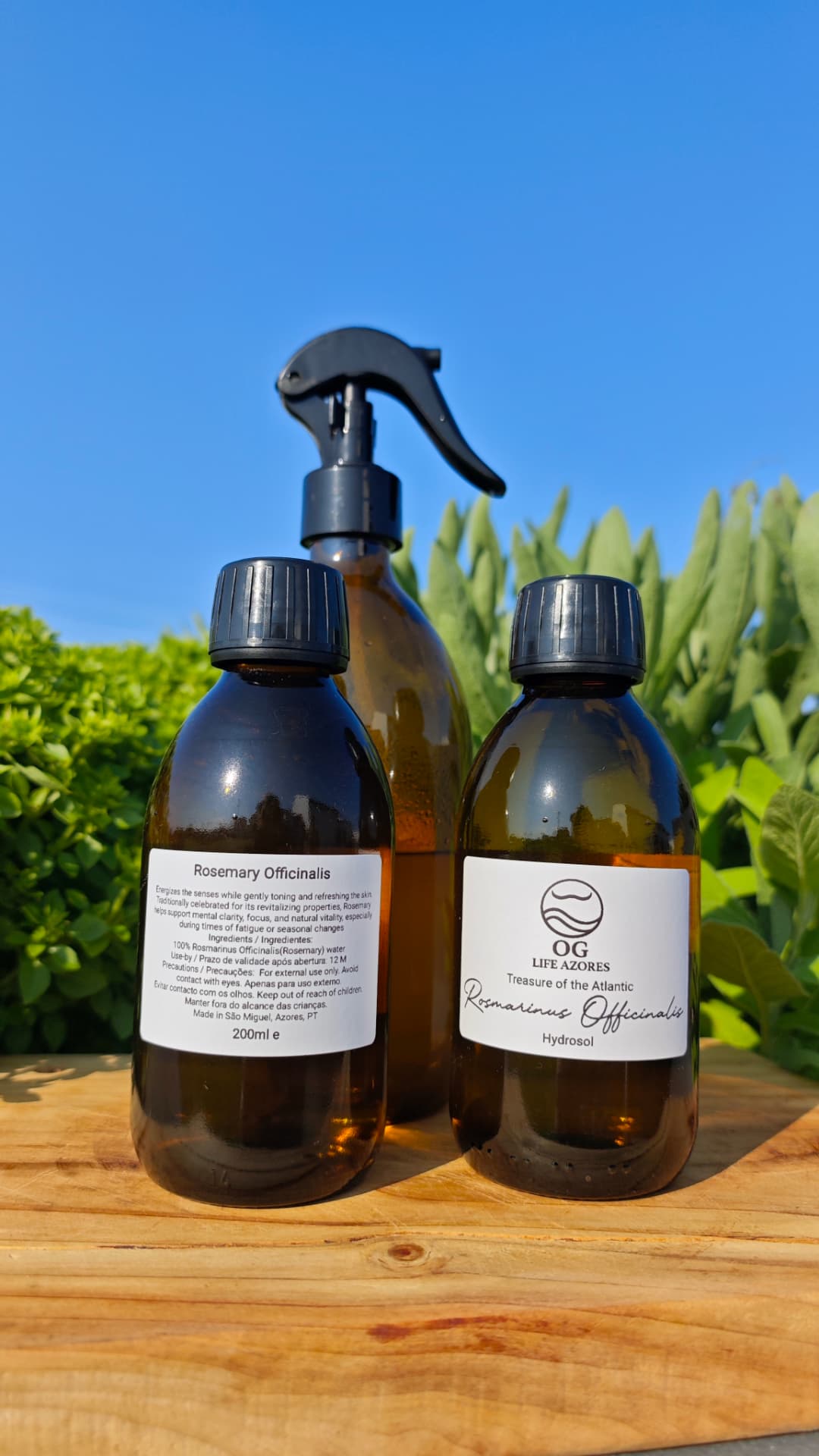
Rosmarinus officinalis
Rosemary Hydrosol
Bright, green and clarifying, a classic hair and skin rinse.